Engineering the Future of Neurorestoration
Our mission is to develop transformative technologies for neurorestoration and neuromodulation that are shaped by real-world surgical practice and driven by unmet patient needs. We integrate neurosurgery, bioengineering, biomaterials, and computational modeling to create next-generation neural interfaces that restore function, reduce morbidity, and improve lives.
Research Focus Areas
Building the Future of Neurorestoration. Today.
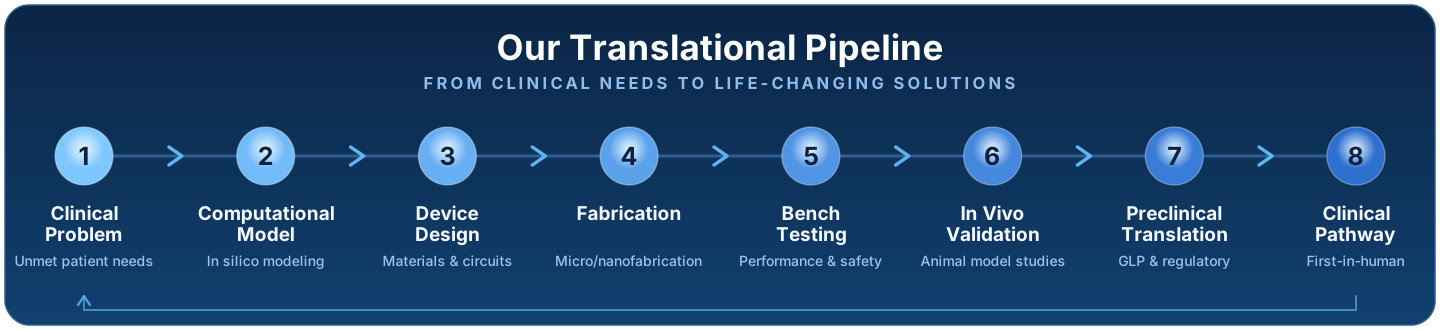
To achieve our goals of designing innovative, minimally invasive neural interfaces, we integrate functional and peripheral nerve neurosurgery with neural engineering, biomaterials, computational modeling and bioelectronics. We create implantable systems capable of long-term interfacing and therapeutic efficacy by addressing foreign body responses and enhancing tissue integration through biohybrid constructs. Our research spans the full translational pipeline from in silico modeling and advanced manufacturing to in vivo validation in rodent and pre-clinical models.
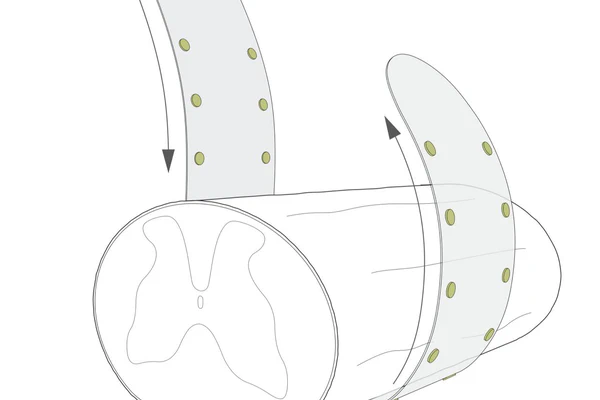
Circumferential Neural Interfaces
Creating ultraconformable cuff implants for 360-degree recording and stimulation of peripheral nerves and spinal cord at sub-nerve resolutions
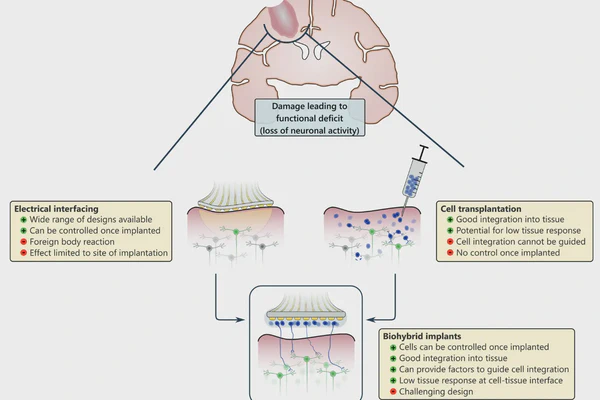
Biohybrid Neural Interfaces
Integrating living neural tissue with bioelectronic devices to achieve functional restoration of amputated peripheral nerves through regenerative bioelectronics
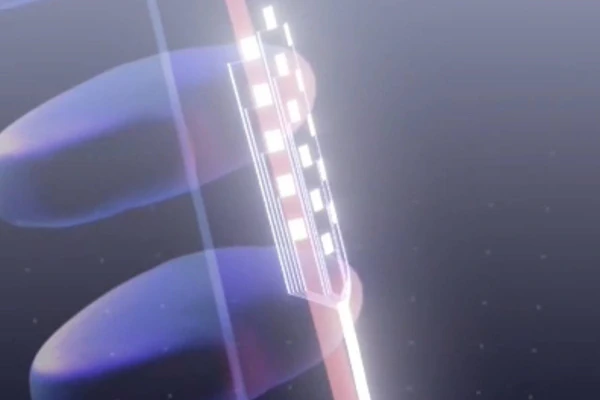
Minimally Invasive Neural Interfaces
Developing flexible electronics with actuation-enabled shape morphing that can be rolled into needle-like forms for percutaneous insertion, then expanded in place to deliver spinal cord stimulation therapy
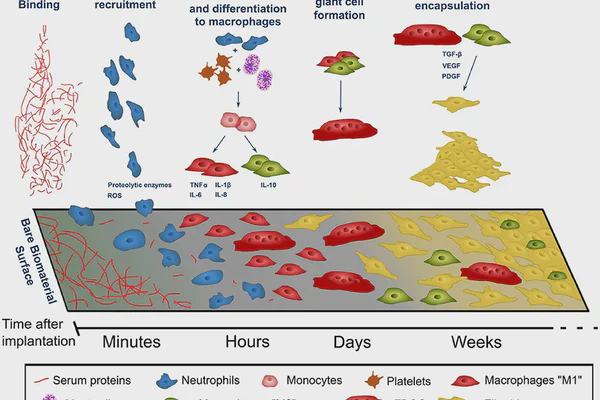
Biomaterials, Foreign Body Response, and Long-Term Implant Stability
Minimizing immune responses to neural implants through inflammasome inhibition and understanding how tissue mechanics influence regenerative capacity post-injury
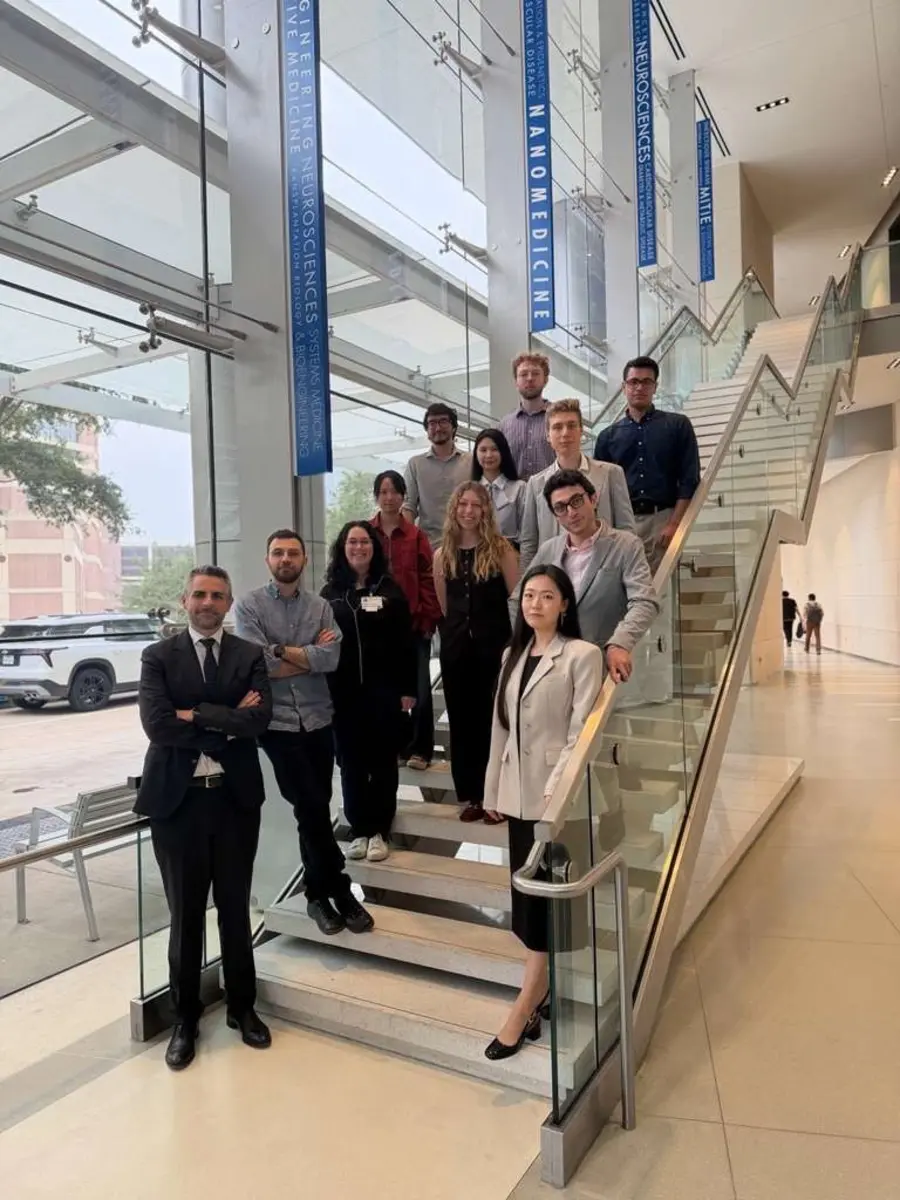
Meet Our Team
Funders & Sponsors
Supporting our research








Collaborators & Partners
Building a Global Network for Neurorestoration
George Malliaras (Bioelectronics Laboratory) – University of Cambridge, Department of Engineering
Mark Kotter (Cambridge Stem Cell Institute) – University of Cambridge
Christopher Proctor (Proctor Group) – University of Oxford, Department of Engineering Science
Scott Keene (Keene Lab) – Rice University, Materials Science and NanoEngineering
Christina Tringides (Tringides Lab) – Rice University, Materials Science and NanoEngineering
Chong Xie (Xie Lab) — Rice University, Electrical and Computer Engineering and Neuroengineering
Lan Luan (Luan Laboratory) — Rice University, Electrical and Computer Engineering
Alejandro Carnicer-Lombarte (Profile) — City University of Hong Kong
Swansea University – Swansea-Methodist Collaborative PhD Program





Contact Us
Visit Our Lab
Barone Neurorestoration Lab
Houston Methodist Neurological Institute
6560 Fannin St
Houston, Texas 77030
United States